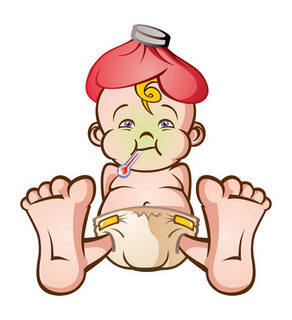
An infant fever is quite scary in a tiny baby...
especially if it is a “true” infant fever. Because a baby has an immature immune system, they cannot fight off infections as easily as older children. This plays a huge role in Child Illness. When an infant spikes a fever while I am caring for them, I immediately call the parents- and you should too. Fevers can be a sign of something else going on in their little bodies, like Roseola or an Earache.
Same thing with pink eye, call the parents and make sure they use Eye Drops for Pink Eye this is super contagious. When you agree to care for an infant, be sure to discuss with the parents what their methods are for taking their temperature and inform them on the method that you use. Also make it a point to include in your health policies that when you encounter a fever that the baby needs to go home. At the same time discuss injuries like Bruise Treatment with the parents at the same time.
At what temperature should you call the parents and be concerned?
- Doctors usually say fevers occur if the temperature rises to 100.4 (38C) or above. I always take a baseline temp on a new baby in my care so I learn what their normal temperature when he or she is well. This is a great tip for you to share with new parents so they will know as well.
- The fever could be only part of what is going on... Does the baby look or act sick: irritable, doesn’t eat well, respiratory distress, throwing up or has, diarrhea, is lethargic or listless –it could be Fifth Disease or RSV. Urge the parents to call their doctor even if their temperature is not high enough to be called an infant fever.
How to take an infant’s temperature:
Doctors recommend that you use a rectal thermometer when checking for fevers. It is something that I suggest to parents, but I personally do not use them. It is something I am not comfortable using or doing.
Instead, I use a digital temporal scanner thermometer that you swipe across the baby’s forehead for the newborns that I provide care for; it is very quick (4 seconds!)and easy as well as accurate. You could also use a digital thermometer and put it under the baby’s arm (arm pit area). >b>I have found this method to be inaccurate, never quite sure about adding a degree, and sometimes very hard to do when you have a sick and squirming little one!
Whatever the method you decide to use, be sure to carefully read the instructions that came with your thermometer. After you are done using it, clean the tip of the thermometer with rubbing alcohol or soap and lukewarm water (make sure this is okay with the manufacturer’s instructions, too- You don’t want to damage it).
Please share your experience or expertise about Child Health.
Do you have a great story about Childrens Health?
Can you help others with Fevers, Rash, Colds, Dehydration, Coughs, Diarrhea, Teething, Acid Reflux, ANYTHING related to a child's health? Share it with us!
And please, for the baby’s safety, hold the thermometer in place! You should never leave the baby unattended when checking for a fever.
Fevers have many causes; infection, dehydration, over
dressing the infant, etc. Whatever the cause of a true infant fever, we
as care providers need to contact the parents/guardians immediately-
especially if the baby is under 2 months of age so they can seek medical
attention.
Go to the top of Infant Fever
Return from Infant Fever to Child Care Business HOME - child care jobs
Privacy and Affiliate Disclaimer Information
We built this website ourselves with Solo Build It.It was easy, with a step by step video guide! Check it out at the links below.
Copyright 2009-2013
Smart Start Child Care LLC
We work from home, check this out for 1 minute and you will see why we can!


SHARE YOUR THOUGHTS WITH US |